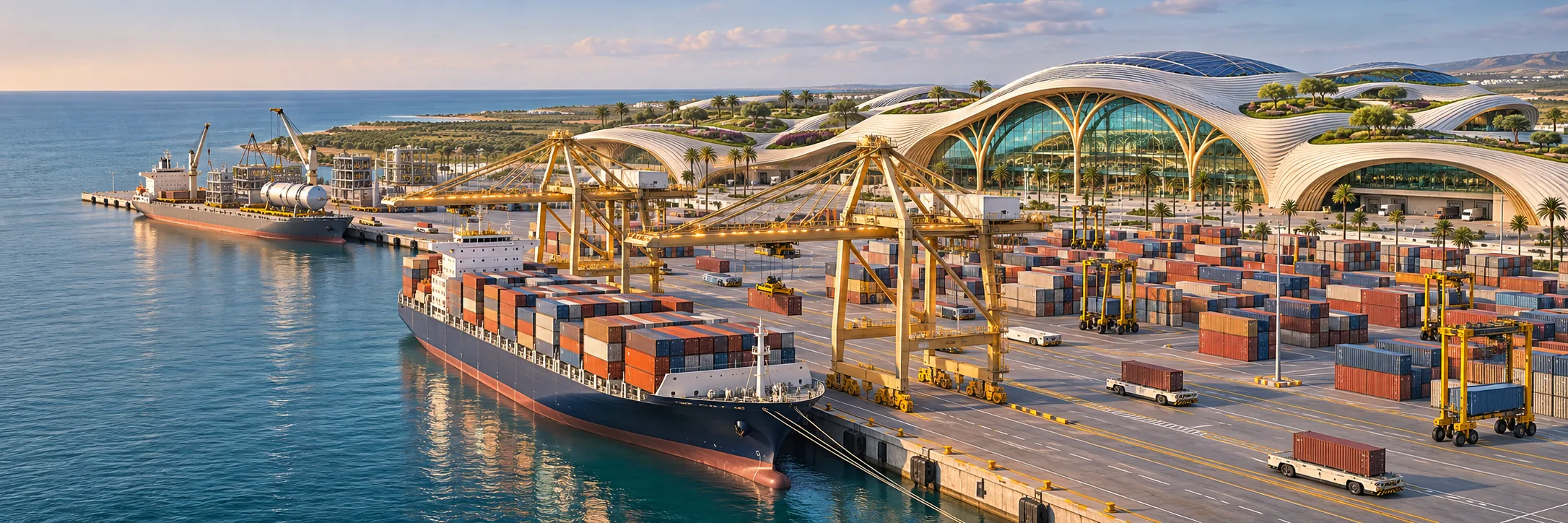
Equip the harbour with the yards, handling systems and operational spaces that connect ships to the industrial and transport network. Container, bulk and multipurpose activities receive their own circulation and transfer arrangements. The supplied reference includes a 4.8-million-TEU annual planning target and dry-bulk vessels up to 80,000 DWT. The terminal development programme translates this scale into practical equipment layouts, yard organisation, maintenance facilities and control systems, delivered through functional operating areas that connect directly to the wider Enfidha programme.
Scope of delivery
Develop container yards, bulk-transfer areas and multipurpose cargo spaces around the released quay and transport layouts.
Install the selected handling systems, their electrical supplies, control interfaces and operational support facilities.
Organise cargo reception, storage, inspection, dispatch and equipment-maintenance functions within each terminal area.
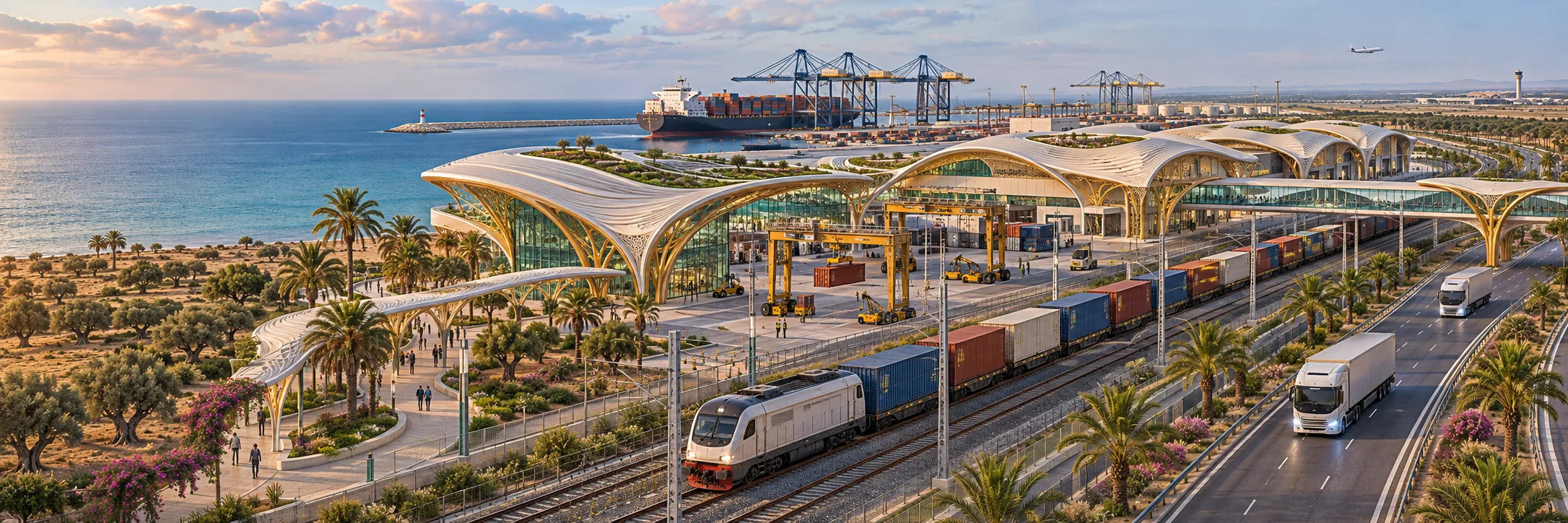
Connect terminal workflows with rail, truck and industrial transfer routes and the programme’s operating information systems.
What this phase hands over
Functional terminal areas with defined cargo routes, storage positions and equipment working envelopes.
Installed handling equipment and associated power, control, communications and maintenance provisions.
Operating procedures connecting vessel handling, yard activity, inland transfer and industrial deliveries.
Equipment and systems handover records supporting terminal commissioning and staff preparation.
Additional construction view · Milestone 06
The work behind the investment.
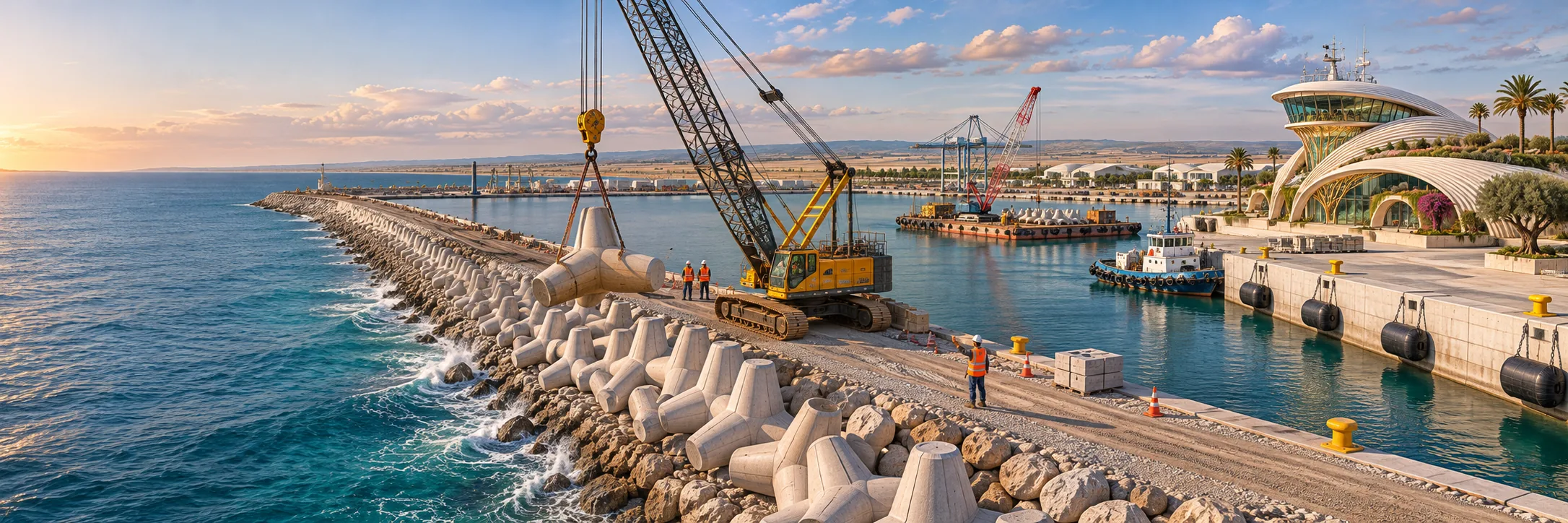
Terminals and cargo handling. This large construction view develops the work package within the expanded harbour and AVIS industrial-park masterplan.
Milestone 06 · Terminals and cargo handling · AVIS construction development
Construction payment 06 · 14%€350,000,000
AVIS-TN-06 Main construction investment including the harbour
Container handling, bulk transfer and large industrial consignments place different demands on space and equipment. Give each activity a clearly organised route from ship to storage or onward transfer. Plan inspection and maintenance functions alongside the cargo flow, where they can be reached efficiently.
Equipment linked to services
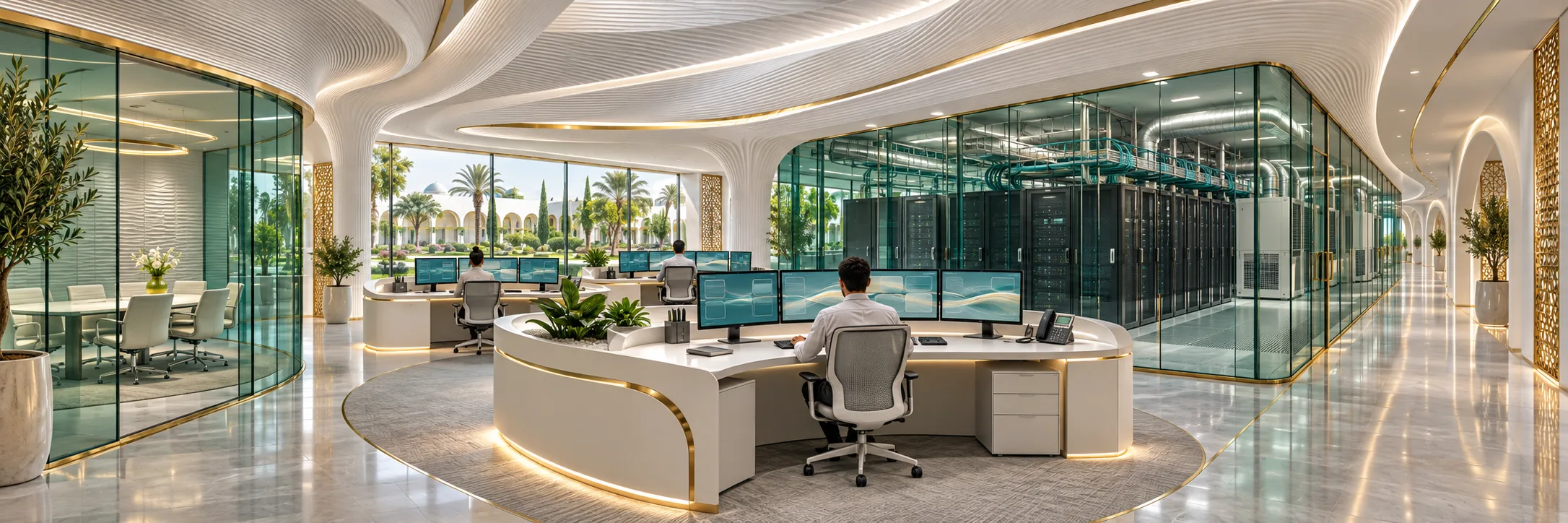
Handling systems depend on reliable power, controls and communications as well as civil support. Coordinate these services with the equipment supplier’s interfaces and the port’s operating systems. Keep maintenance isolation, access and replacement routes visible in the installation package.
A terminal that can grow
Develop the yard and equipment layout in functional increments. Each completed area should have a clear operating purpose and its own connection to the surrounding network. The reference throughput target guides the longer-term layout while the delivery sequence gives each installation a defined role.
Execution logistics
Connect the work.
Schedule major equipment deliveries against completed quay sections, crane access and available lifting capacity. Reserve commissioning areas and maintenance routes before yards fill with operating equipment. Coordinate terminal traffic with freight gates and industrial receiving areas to avoid opposing flows at shared interfaces.
Delivery interfaces
Milestone & handover
Terminal milestone: installed cargo systems and defined yard areas enter coordinated commissioning.
Quay structures and berthing interfaces release the work areas for terminal equipment and yard installation.