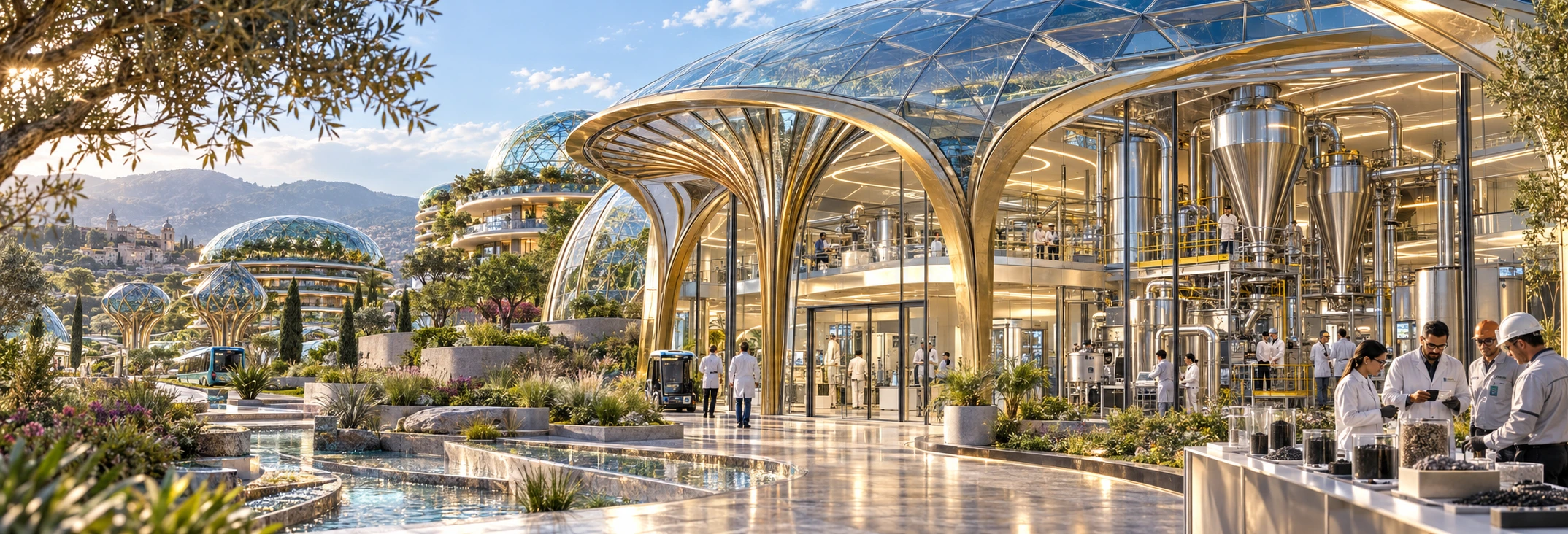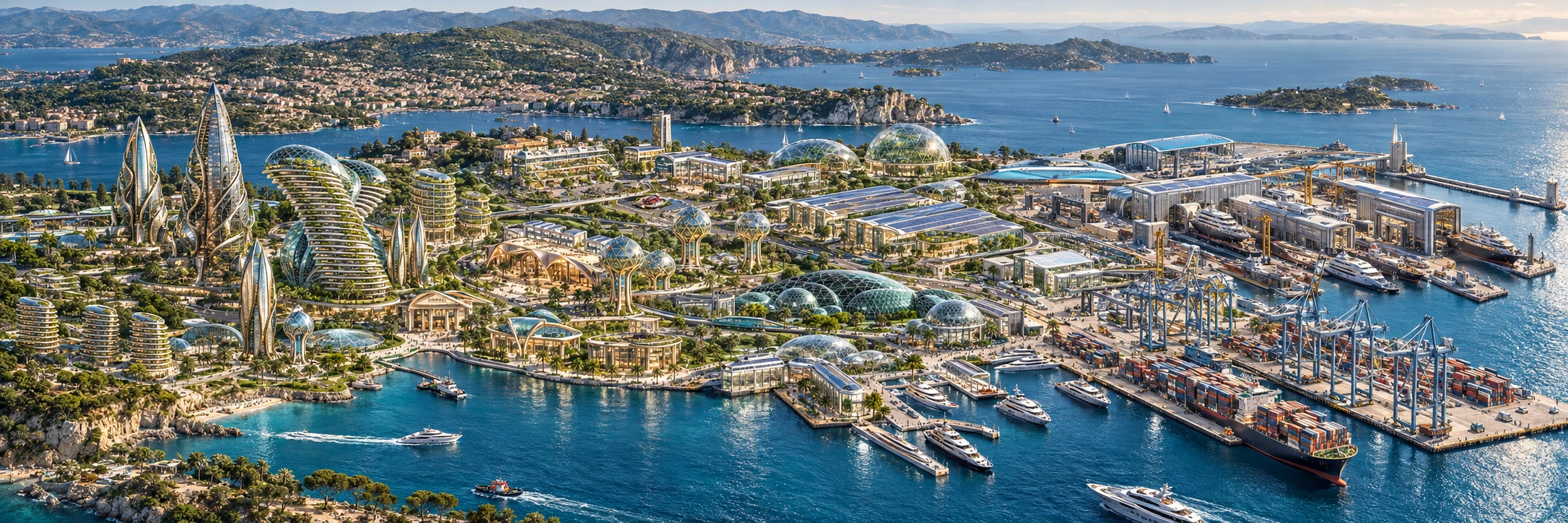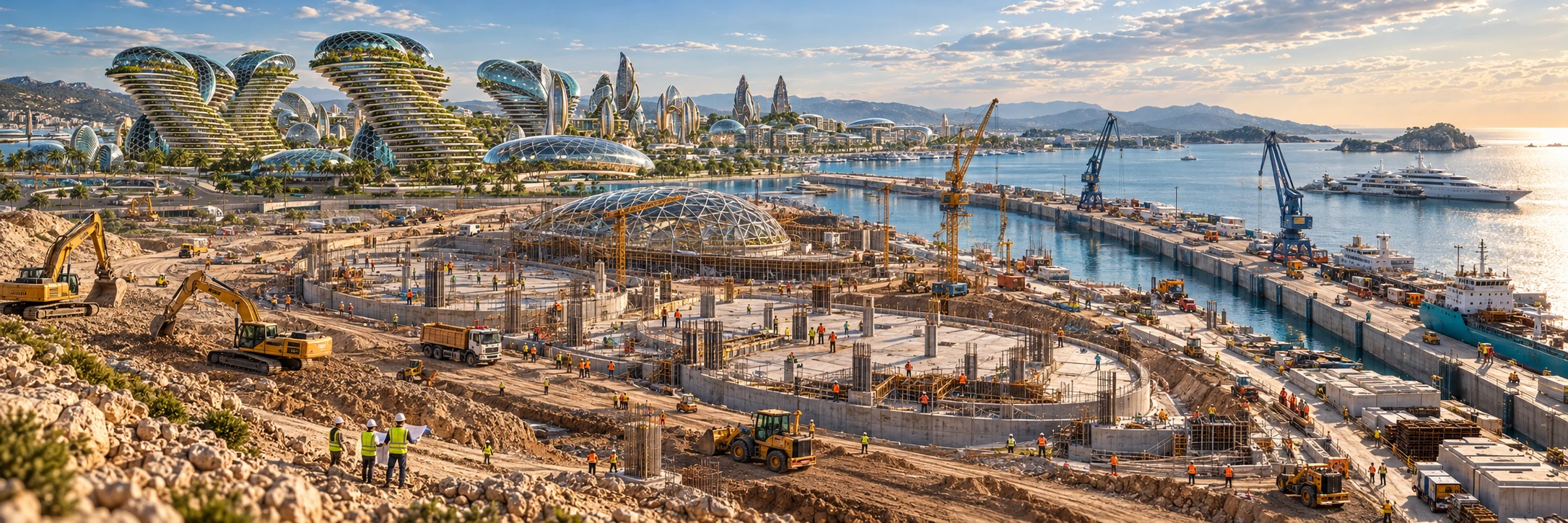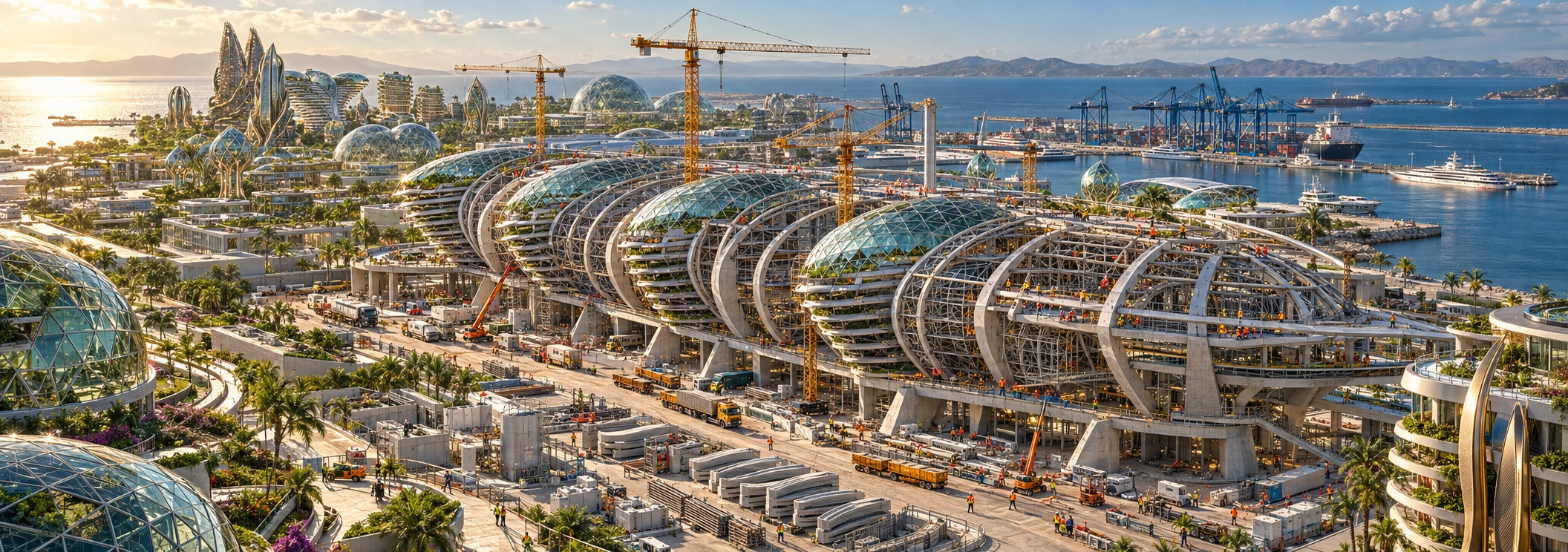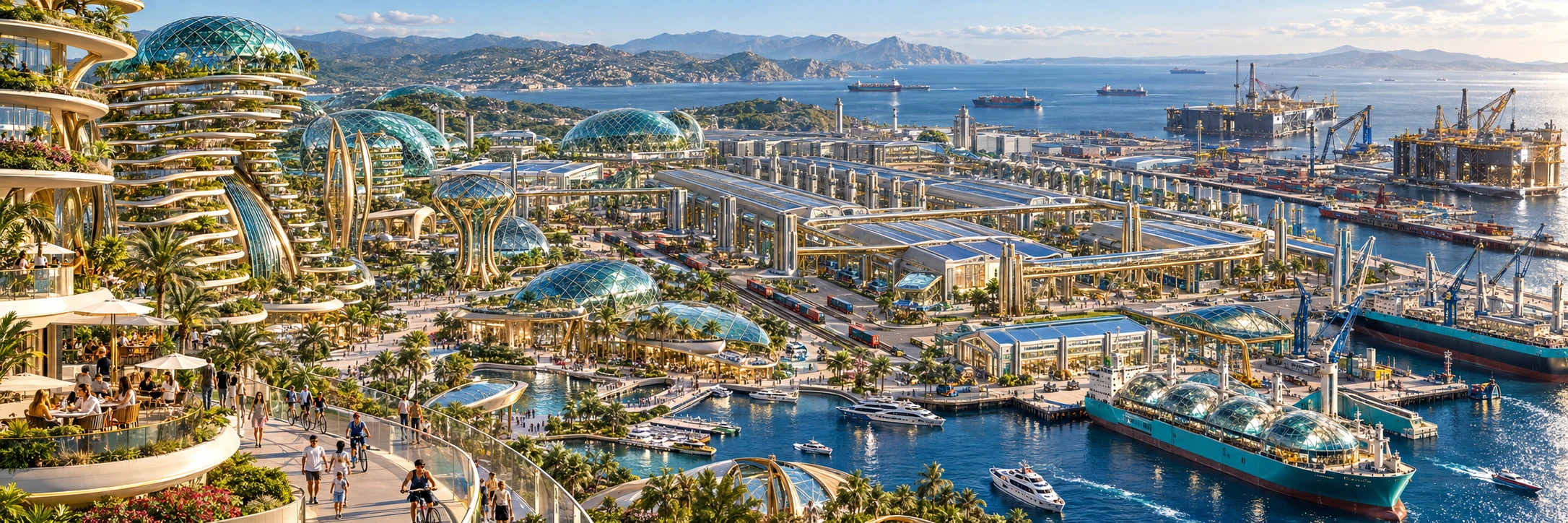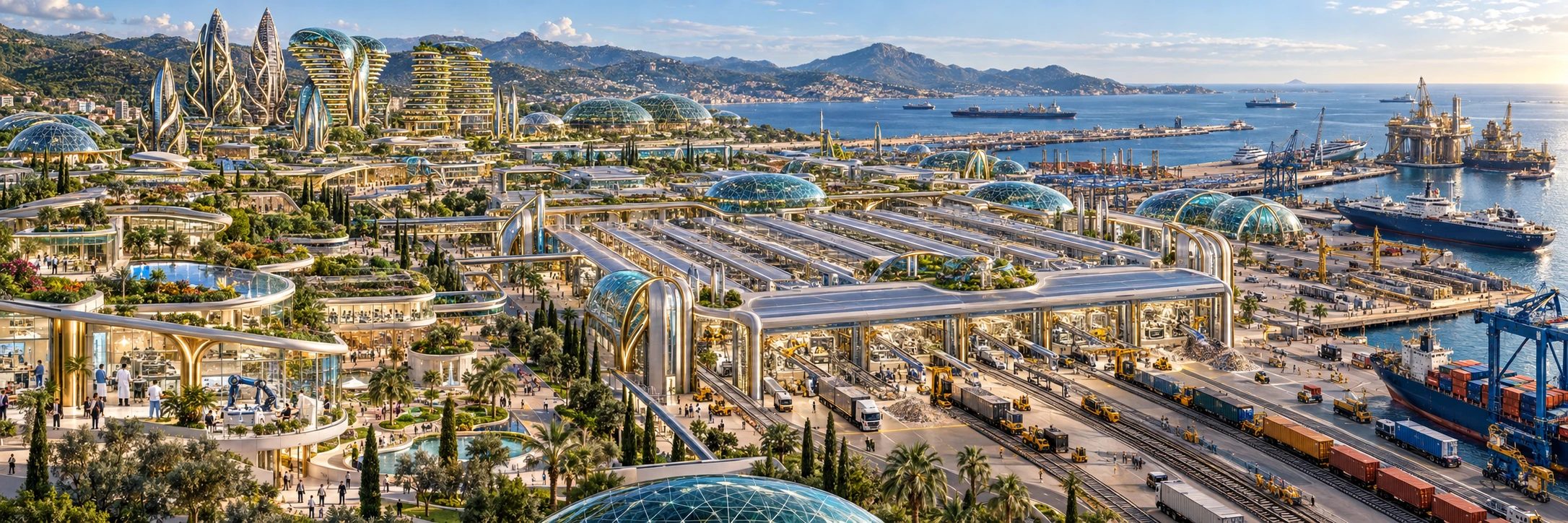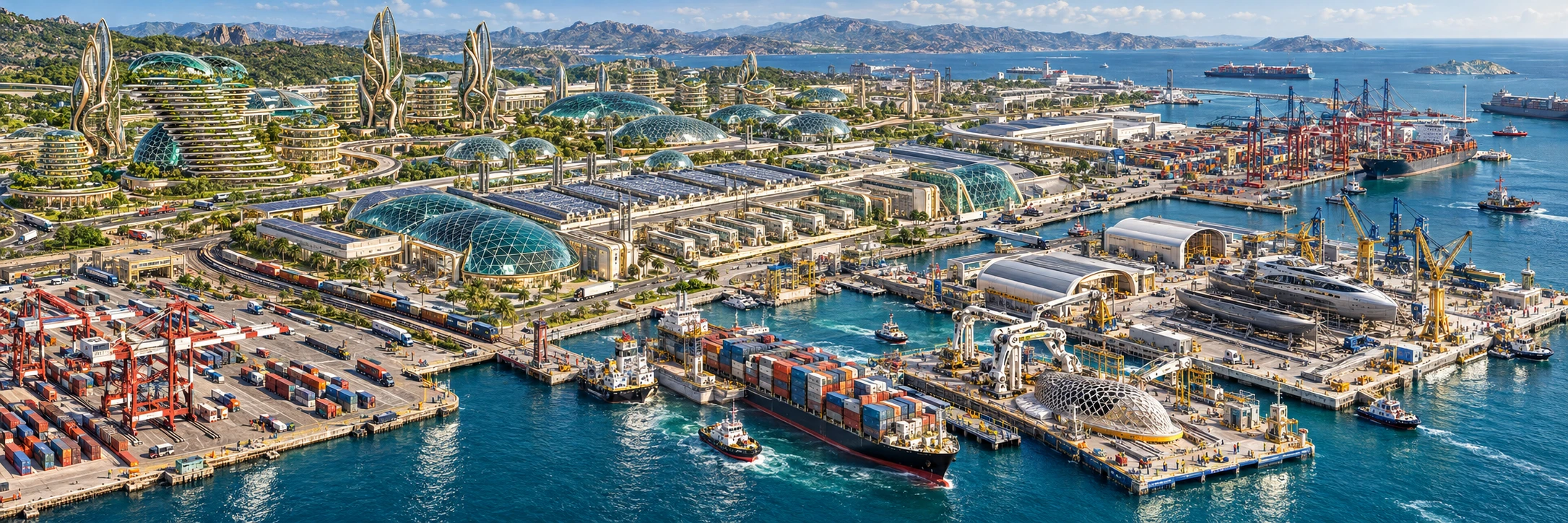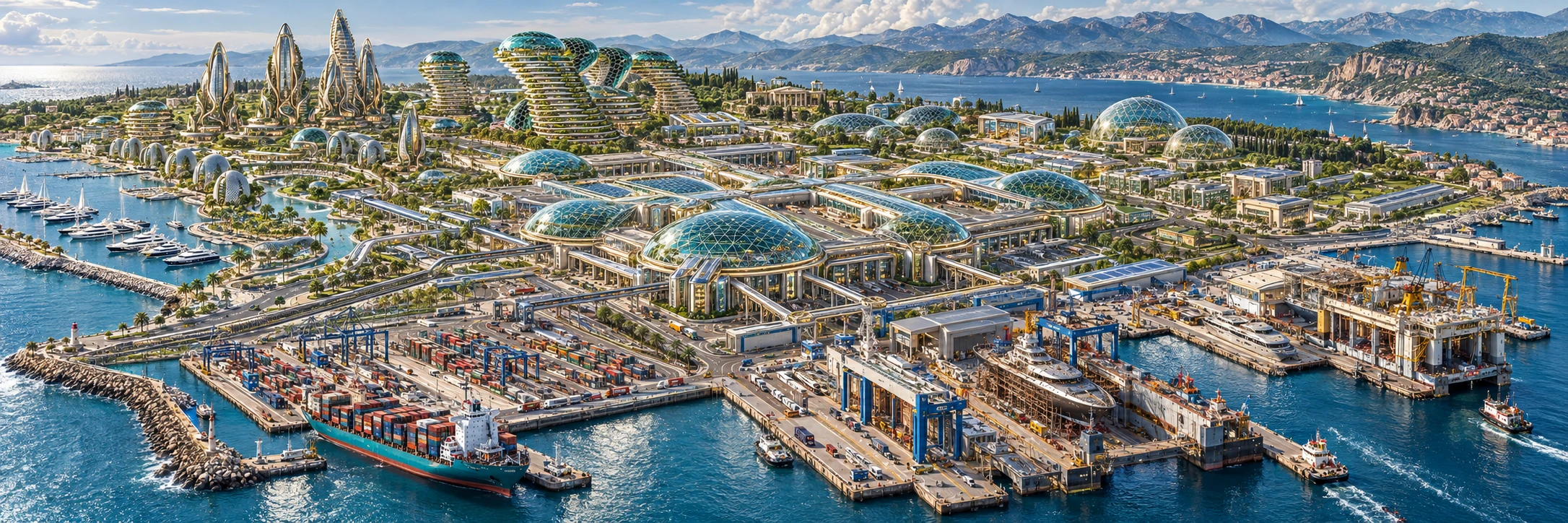
Waste-to-nanopowder. Advanced manufacturing. Alternative energy. A connected campus planned for at least 5,000 people.
Explore the 12 phases ↓Sarno anchors the prototype, laboratory and first production trials. The larger development is planned for a coastal location approximately 30 km south of Salerno, bringing industrial production and the infrastructure of daily life into one coordinated campus.
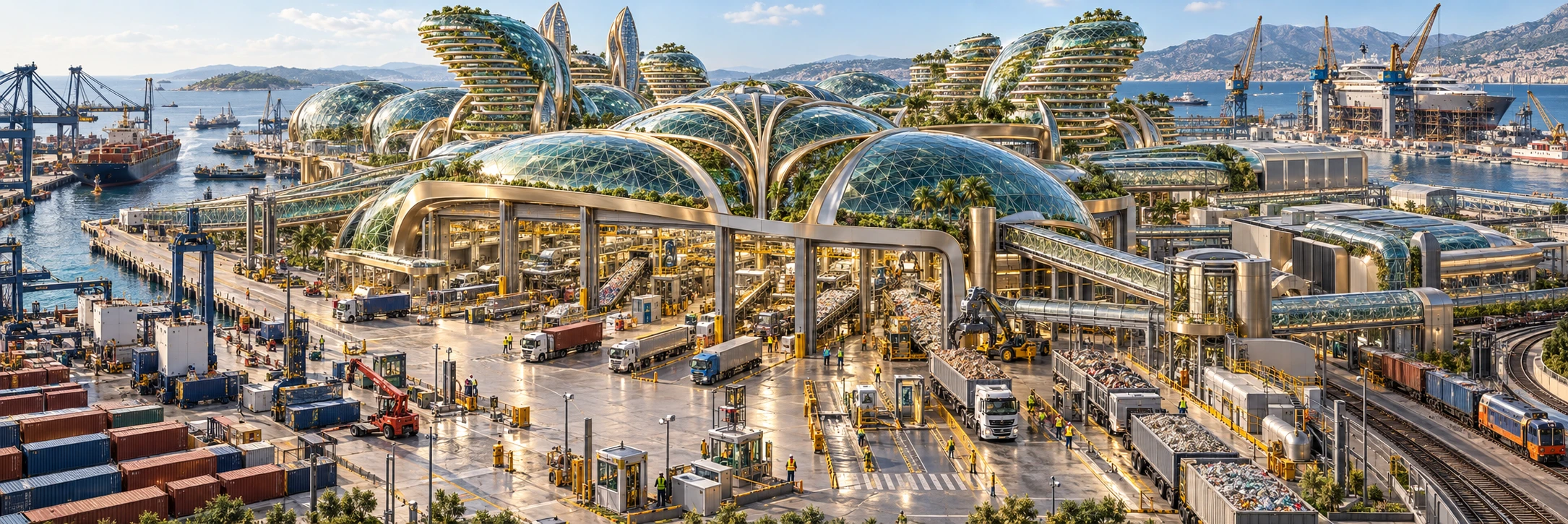
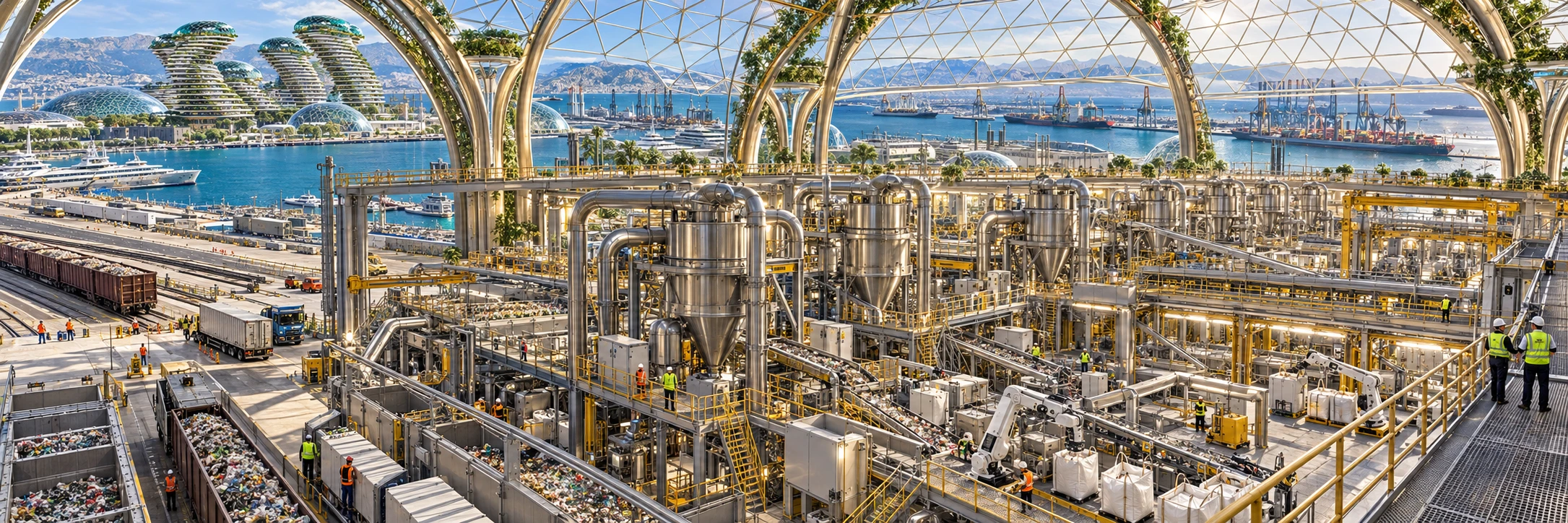
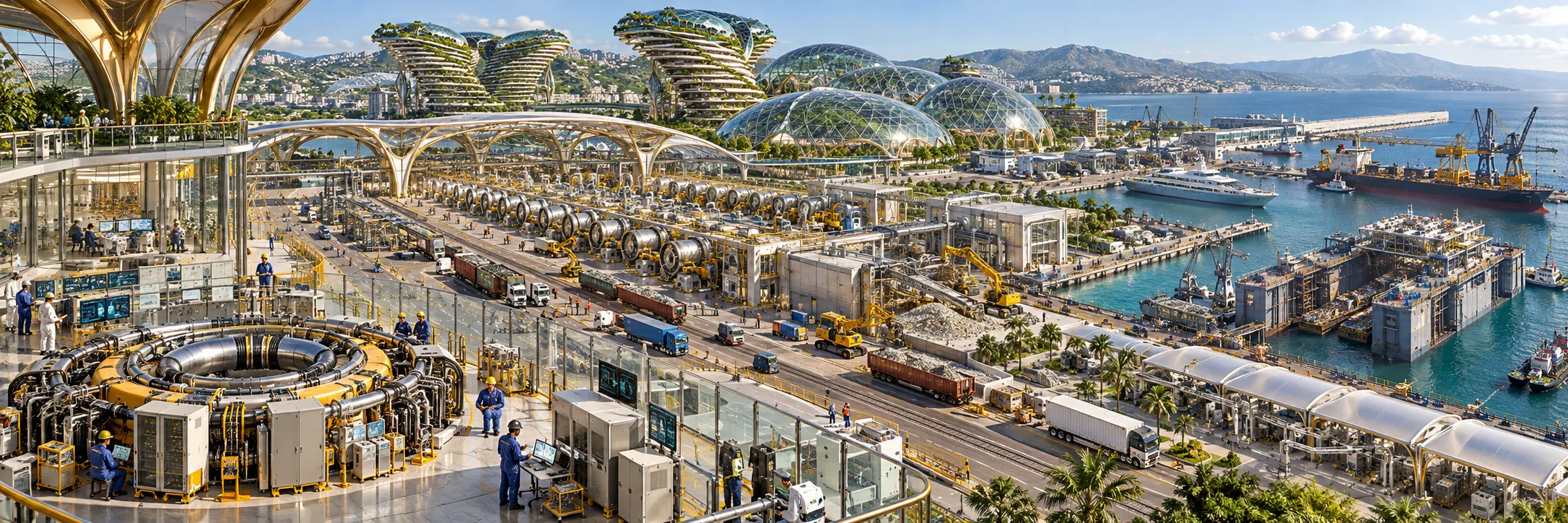
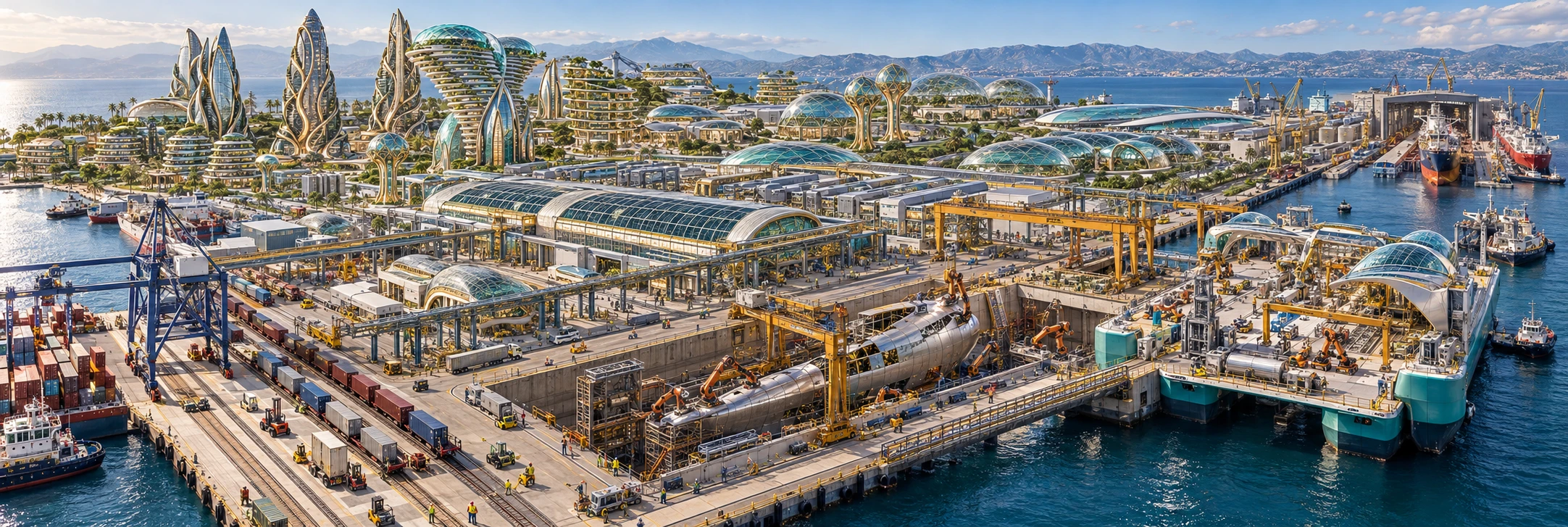
Principal process halls: 250 × 250 metres. VORTEX programme: 500 mills. Robotic kinetic-fusion printing, major harbour terminals, heavy floating platforms, shipbuilding, rail freight and truck logistics form one coordinated development vision.
The 100-hectare brief describes the onshore programme. Harbour basin, water areas and marine works require a separate boundary and engineered scope. The twelve financial allocations remain the proposed division of the overall €2.5 billion programme, including incurred and committed expenditure.
Each phase page brings together its construction scope, logistics, acceptance milestone, source imagery and payment setup. Work packages may overlap where their design and site interfaces are released.

Sarno →

Sarno + coastal site →

Coastal site →

Coastal site →

Coastal site →

Coastal site + Sarno support →

Coastal site →

Coastal site + Sarno laboratory →

Coastal site →

Coastal site + Sarno research link →

Both sites + regional logistics →

Whole programme →
The programme began in 2005 and continues through 2026 with ongoing development activity and expenditure. Its former waste-to-petrol route will not be executed. The current programme develops waste-to-nanopowder, advanced manufacturing, alternative-energy systems and the supporting campus infrastructure.
Programme expenditure is covered by the GENESIS Green Bond.
The project is now moving onto the AVIS platform to bring industrial companies, engineering teams and universities into coordinated delivery packages. Participants contribute manufacturing capability, engineering, research, testing and training through defined scopes and interfaces.
The phase pages organise the continuing development, expenditure and participant responsibilities. They do not restart the project or assume that every package has reached the same stage.
Weighted phase allocations match the proposed work packages. The first €5 million follows the supplied Sarno prototype budget; the remaining allocations are proposed within your current €2.5 billion total.
| Phase | Package | Share | Tranche | Cumulative |
|---|---|---|---|---|
| 01 | Sarno • The proving ground | 0.2% | €5,000,000 | €5,000,000 |
| 02 | Masterplan & delivery engineering | 1.8% | €45,000,000 | €50,000,000 |
| 03 | Site access & enabling works | 4% | €100,000,000 | €150,000,000 |
| 04 | Civil structures & industrial halls | 8% | €200,000,000 | €350,000,000 |
| 05 | Receiving, sorting & feed preparation | 12% | €300,000,000 | €650,000,000 |
| 06 | VORTEX production & powder refinement | 14% | €350,000,000 | €1,000,000,000 |
| 07 | Energy infrastructure & manufacturing | 12% | €300,000,000 | €1,300,000,000 |
| 08 | Advanced materials & 3D manufacturing | 10% | €250,000,000 | €1,550,000,000 |
| 09 | Living campus for 5,000+ people | 12% | €300,000,000 | €1,850,000,000 |
| 10 | University, healthcare & innovation | 10% | €250,000,000 | €2,100,000,000 |
| 11 | Distribution, digital systems & integration | 10% | €250,000,000 | €2,350,000,000 |
| 12 | Integrated commissioning & handover | 6% | €150,000,000 | €2,500,000,000 |
| Total programme | €2,500,000,000 | €2,500,000,000 | ||
Budget envelopes are not supplier quotations or evidence of funds received. Each package includes its allocated delivery and risk allowance; no additional contingency is added to the displayed total. Tax, land acquisition treatment and contract terms remain to be resolved within the agreed cost baseline.
The €2.5 billion is the overall programme envelope. Incurred costs, current commitments and remaining work must be reconciled within the 12 allocations before a further phase charge is released. The tranche schedule is not an additional €2.5 billion on top of historical spending.
Proposed 100-hectare onshore allocation: 30 ha processing and manufacturing; 12 ha energy and utilities; 10 ha onshore logistics; 8 ha laboratories and education; 25 ha living campus; 5 ha civic and healthcare; 10 ha landscape and buffers. Harbour water areas and marine works are separately defined. Hall counts, rail geometry and dock arrangements require an integrated land-and-water masterplan.
Housing, water, wastewater, mobility, food, healthcare and emergency access must be sized together. The target does not mean 5,000 jobs or occupied homes already exist.
The equipment manual describes dry-material milling, compressed-air services, separation and filtration. Powder size, throughput, energy consumption and product suitability must be measured for each qualified feedstock. HMD energy systems remain a development and test package until demonstrated.
The programme began in 2005 and its scope has continued to evolve. Historic documents describe €5m, €200m and €2bn stages, while the press article refers to a 500,000-tonne facility and other papers mention larger expansion targets. These are not presented as a single proven capacity. This 12-phase programme uses the owner’s current €2.5bn brief.
D1 — 11322905The projectDev.pdf (2 pages): project participants and original development stages.
D2 — ITALIAN PROTOTYPING NANOPOWDER FROM WASTE PROJECT.pdf (92 pages): prototype budget, equipment, operating manual and supporting records.
D3 — 310820263908ProjectDescriptionCompress1(2).pdf (20 pages): the broader industrial, energy, manufacturing and social-infrastructure vision.
The waste-to-petrol concept and the pyrolysis material in the historical appendix are superseded and will not be executed under this programme. They are retained only as historical source context. The active programme started in 2005 and continues with ongoing expenditure covered by the GENESIS Green Bond, as confirmed by the project sponsor. Supplier references and certificates do not establish appointment to the new coastal works.
Current location, land area, population target and programme total come from the owner’s brief. Phase sequencing, allocations, responsibilities and acceptance milestones are proposed editorial / delivery planning.
Read the AVIS.Land project article →
D4 — 18012026390810ProjectSumary.pdf (73 pages): AVIS international-reference harbour, process-hall, robotic printing and tower designs. Its Colombia location, historic budgets, capacities and performance claims are not adopted as verified facts for Italy. Latest owner brief adds 250 × 250 m halls, 500 VORTEX mills and large harbour / shipping interfaces.